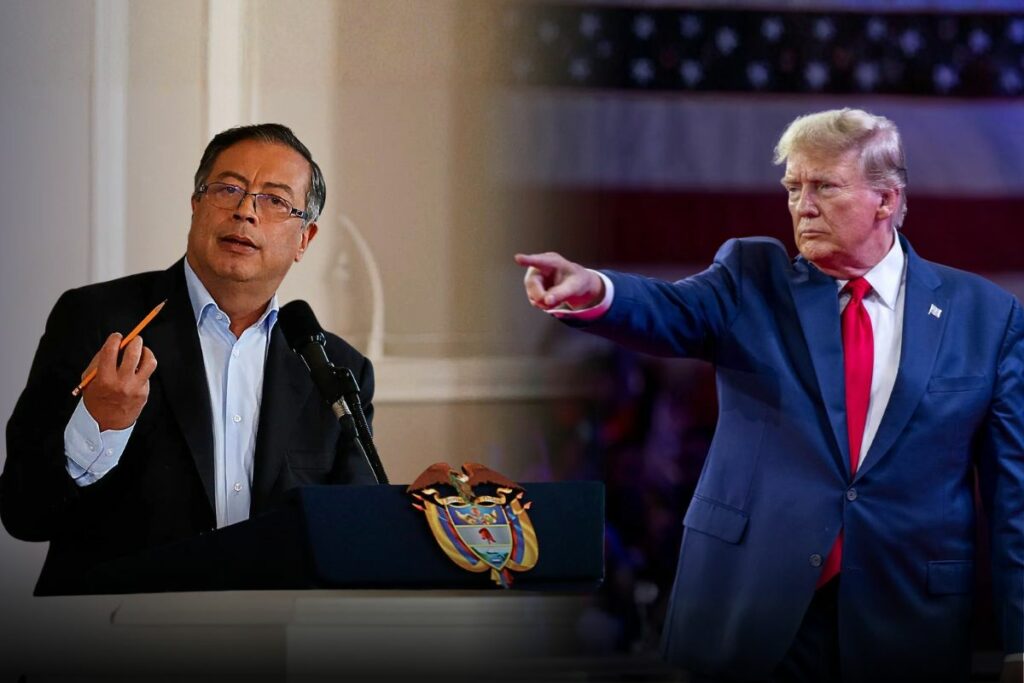
On May 31, 2026, Colombia will elect its next president. However, one of the frontrunners in the polls faces an unexpected obstacle that could redefine the country's electoral landscape. Iván Cepeda, a senator from the Historic Pact who won his party's internal primary in October 2025 with 1.5 million votes, was disqualified by the National Electoral Council (CNE) from participating in the interparty primary scheduled for March 8. This decision, approved by a narrow 6-4 margin, has sparked an intense debate about the boundaries between strict enforcement of electoral law and the wielding of institutional power for political ends.
Side by side arguments
The Historic Pact's strategy was straightforward: first, hold an internal primary in October 2025 to determine their presidential candidate. The winner, Iván Cepeda, would then participate in a broader interparty primary on March 8, 2026, known as the "Front for Life," which aimed to unify Colombia's entire left and center-left. This primary would afford Cepeda greater legitimacy, massive media exposure, and the benefit of electoral coattails during the legislative elections on the same day.
However, the CNE determined that the October primary was not "internal" as the Historic Pact claimed, but rather "interparty." The rationale: in October 2025, the Historic Pact did not yet exist legally as a unified party. The merger of its constituent parties (Democratic Pole, Patriotic Union, and Communist Party) was only approved on December 3, 2025—a month after the primary. Therefore, according to the CNE, the October primary was technically conducted among several distinct parties, rendering it interparty in nature.
The CNE grounded its decision in Article 7 of Law 1475 of 2011, which establishes that the outcome of any primary is mandatory and binding upon participants. Moreover, the law expressly prohibits a candidate from participating in more than one interparty primary within the same electoral cycle, with the aim of preventing "double allegiance" and ensuring parties honor decisions made in prior primaries.
Alternate magistrate Hollman Ibáñez, whose vote proved decisive in securing the requisite majority, argued that primaries cannot be employed as preliminary or transitional stages, but are designed to establish unique and definitive candidacies. Under this interpretation, if the Historic Pact sought to conduct a preliminary selection without binding effects, it should have employed internal mechanisms stipulated in party statutes—such as assemblies or conventions—rather than a formal primary.
Fissures in the Legal Rationale
Nevertheless, the CNE's decision raises significant questions. First, the Historic Pact maintains that the October primary was genuinely internal because both candidates (Iván Cepeda and Carolina Corcho) received endorsement from the same party: the Democratic Pole. There was no competition among different parties, but rather between two figures from the same political movement undergoing merger.
Furthermore, the CNE committed a substantial procedural contradiction: it approved the October 2025 primary as internal, permitting it to proceed under that legal framework. Only months later, when Cepeda sought to participate in the March primary, did the CNE retroactively reinterpret that primary as interparty. This shift in criteria mid-electoral cycle generates legal uncertainty and raises doubts about the institutional coherence of the electoral body.
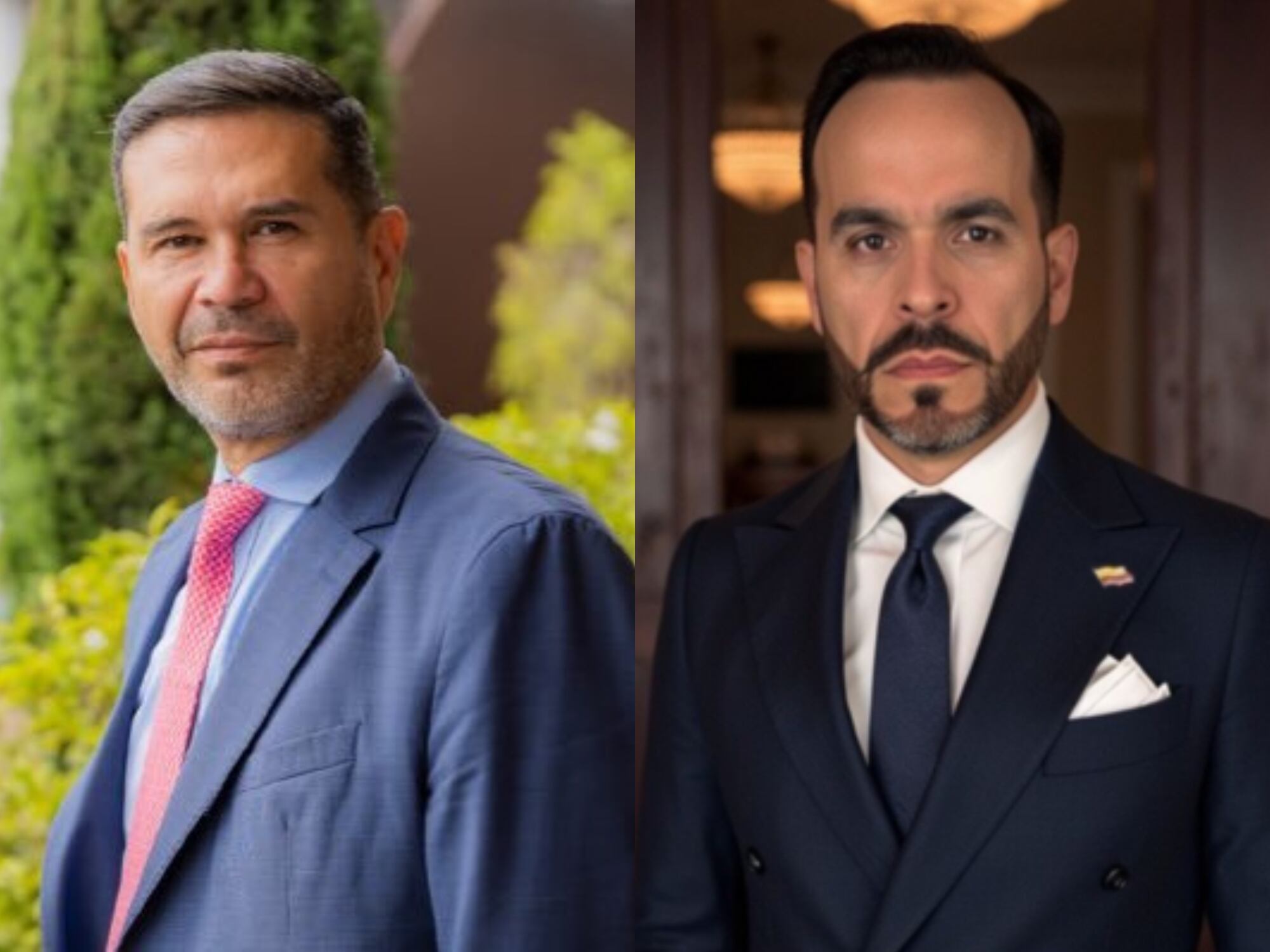
Concerns about impartiality are equally troubling. The decision was rendered by a tight 6-4 vote, with the deciding ballot cast by alternate magistrate Hollman Ibáñez, who had publicly opined on the case before intervening in the decision. Additionally, magistrate Álvaro Hernán Prada participated in the vote despite facing ongoing criminal proceedings in which Cepeda appears as the victim. Both officials were accused of failing to recuse themselves when evident conflicts of interest existed.
Political Ramifications: Fragmentation of the Left
Cepeda's disqualification had an immediate effect: the Historic Pact officially withdrew from the Front for Life primary. Cepeda announced he would proceed directly to the first round of presidential elections on May 31, while Roy Barreras, another leader from the same party, elected to remain in the March 8 primary. This division fragments the leftist vote at a critical juncture.
Proceeding directly to the first round carries advantages: Cepeda retains the legitimacy of having garnered 1.5 million votes, conserves resources, and maintains programmatic autonomy. However, he forfeits the massive visibility afforded by appearing on the March 8 ballot, when millions of Colombians will cast votes in legislative elections. Nor can he capitalize on the coattail effect generated by coinciding with congressional balloting—a pivotal factor for voter mobilization.
The scenario grows more complex should Roy Barreras secure a favorable outcome in the Front for Life primary. In that event, he could demand Cepeda withdraw and endorse him as the left's sole candidate, generating internal tensions within the Historic Pact and undermining its capacity to present a unified front.
Conclusion
Iván Cepeda's exclusion from the March 8 primary poses a fundamental question: are we witnessing strict enforcement of electoral law, or the strategic deployment of legal technicalities to reshape the electoral landscape? While the CNE possesses formal legal arguments to substantiate its decision, several elements raise reasonable doubts regarding its impartiality and consistency.
The retroactive reinterpretation of a previously approved primary, undisclosed conflicts of interest among key magistrates, and the pattern of rulings that have systematically weakened the Historic Pact at critical electoral moments suggest motivations may transcend mere regulatory application. As an El Espectador editorial observed, "two realities can be true": the CNE may possess technical merit while simultaneously having forfeited all legitimacy as an impartial arbiter of the electoral process.
What hangs in the balance extends beyond a single candidate's participation—it encompasses the integrity of Colombia's electoral system and public confidence in its institutions. Regardless of its formal juridical validity, the CNE's decision has succeeded in fragmenting the left, constraining voter options, and generating uncertainty about the rules of electoral engagement. In a nation aspiring to deepen its democracy, these signals prove profoundly disquieting.
The definitive answer to the question posed in the title will only emerge with time and, above all, through Colombians' capacity to demand genuinely independent, impartial electoral institutions serving democracy rather than particular political interests.