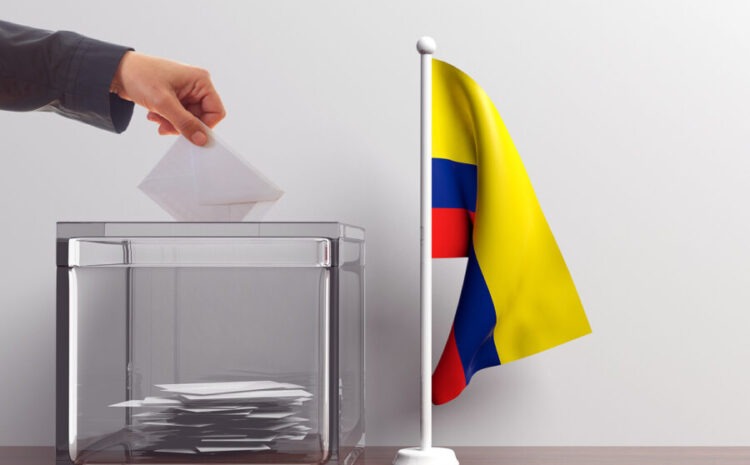
A new presidential term is approaching in Colombia, and pre-candidates and candidates for the presidency are preparing intensively with proposals, campaigns, and participating in debates to showcase who will be the best option to receive the position, currently held by Gustavo Petro. The first round of the presidential election will take place on May 31, 2026, when citizens will have the task of electing their next leader for the term from August 7, 2026 to August 7, 2030.
On Sunday, January 25, Colombian right-wing and center-right pre-candidates gathered in a televised debate organized by El Tiempo, CityTv, La FM, and Noticias RCN. This event was called "Debate de la Gente" (The People's Debate), because the main dynamic was that questions were asked by citizens themselves. The participants were Vicky Dávila, Paloma Valencia, Enrique Peñalosa, Juan Manuel Galán, Aníbal Gaviria, David Luna, Juan Daniel Oviedo, Mauricio Cárdenas, and Juan Carlos Pinzón –political and media figures with extensive and resonant track records– who will be part of a center-right and right-wing inter-party consultation called "Gran Consulta por Colombia" to be held on March 8 to choose which of them will be the official representative for the first presidential round.
During the debate, the presenters and moderators led the exchange under a structured format in thematic blocks that addressed key areas such as health, economy, security, and education, among others. Additionally, a round of quick questions was included, one of which elicited responses from several pre-candidates that generated bewilderment and widespread reaction among the Colombian audience.
Development
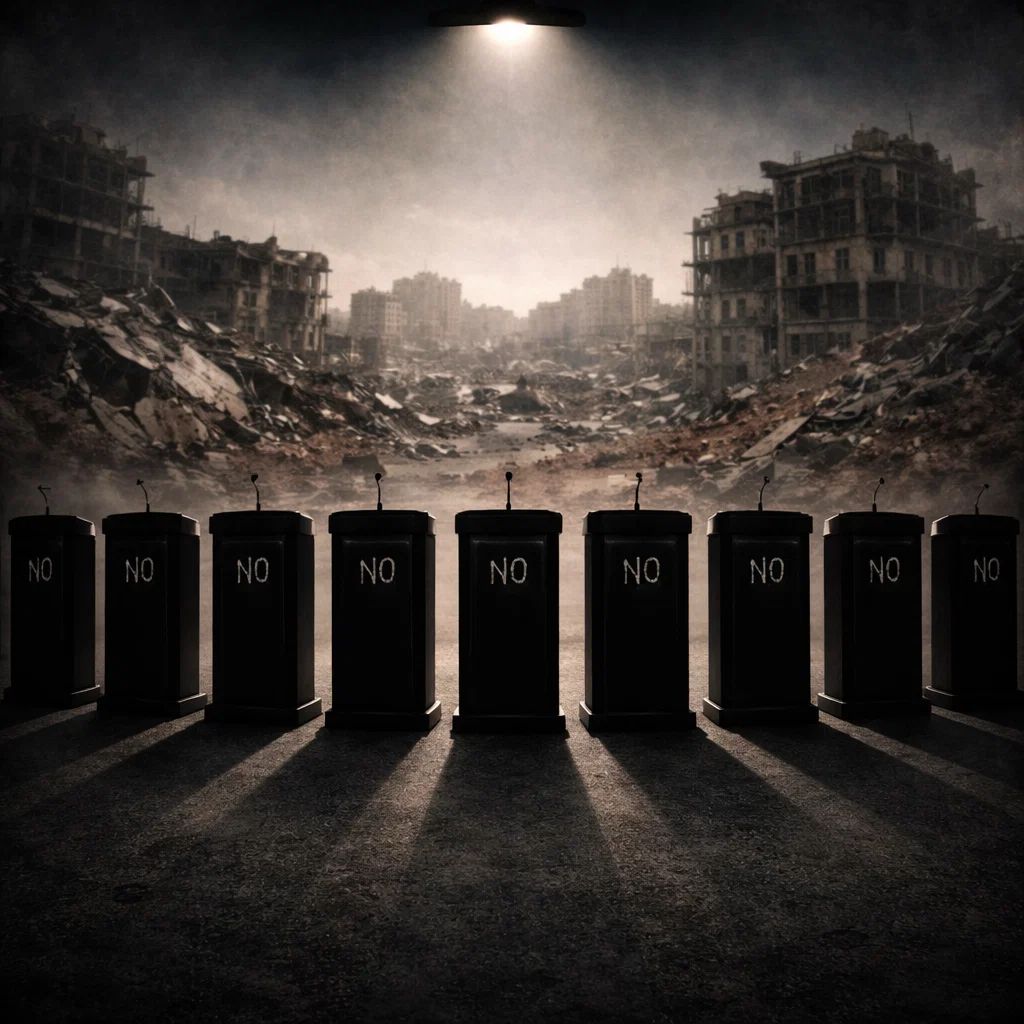
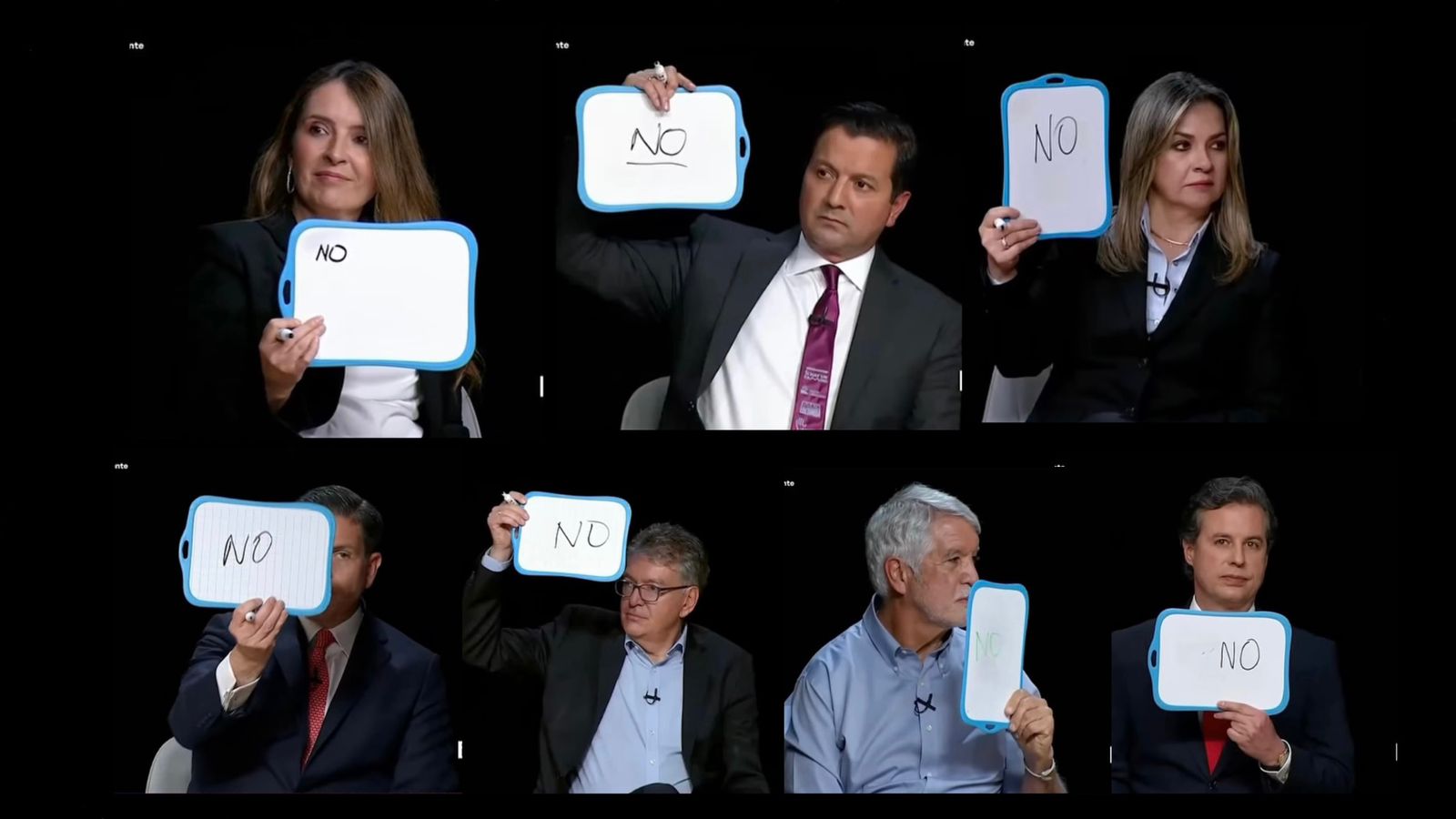
"Do you consider Israel's military action in Palestine to be genocide? Yes or no" was the question that the nine participants received, to which seven of them answered no. Paloma Valencia, David Luna, Mauricio Cárdenas, Juan Carlos Pinzón, Enrique Peñalosa, Juan Manuel Galán, and Vicky Dávila openly and categorically consider that what happened in the Gaza Strip did not constitute genocide.
In this scenario, it is necessary to recall the concept of genocide coined by Polish lawyer Raphael Lemkin in 1944 and presented to the UN General Assembly. After witnessing the horrors of the Holocaust and researching the Armenian genocide, Lemkin decided to create a word that encompassed the magnitude and gravity of the events. According to the official United Nations definition, genocide consists of the total or partial annihilation of a nation or ethnic group, but beyond the evident physical and material extermination of the lives of men, women, and children, it transcends into a coordinated plan of actions aimed at the destruction of the essential foundations of national groups' lives with the objective of erasing their trace from human history. Erasing culture, religion, and language, disintegrating personal freedom and security, economic destruction, and finally physical destruction are all part of the genocide process the lawyer referred to.
Since October 7, 2023, according to data from the UN Office for the Coordination of Humanitarian Affairs (OCHA), more than 70,000 Palestinians have been killed by the Israeli army. Tens of thousands of wounded are reported with figures exceeding 150,000 or more, according to hospital counts and international reports. In addition to observing the territory that was destroyed and reduced to rubble, where thousands of lifeless bodies lie beneath. If the death toll doesn't count for the seven candidates to consider this scenario as genocide, we could be guided by the second part of Lemkin's definition, where beyond physical destruction, the systematic destruction of the foundations that form that group is intended with the objective of preventing their continuity as a differentiated community.
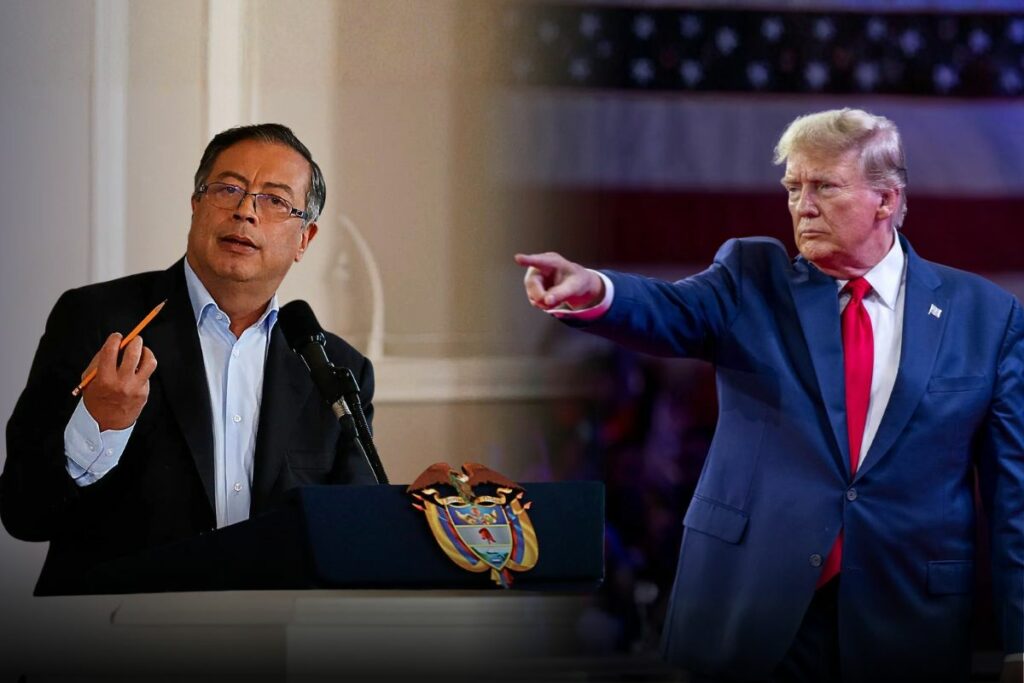
It seems unthinkable that after witnessing and learning about the criminal acts committed during this conflict against the Palestinian population, US President Donald Trump announces together with his new body called the "Board of Peace" a "Gaza reconstruction plan". This ambitious and chilling project seeks to raise the foundations of the Gaza Strip territory and turn it into a complex of huge buildings and seaside resorts.
"Look at this location by the sea, look at this beautiful land, what it could be for so many people. It's going to be so great. People who today live in such precarious conditions are going to live so well. But it all started with a location, that's the vision."
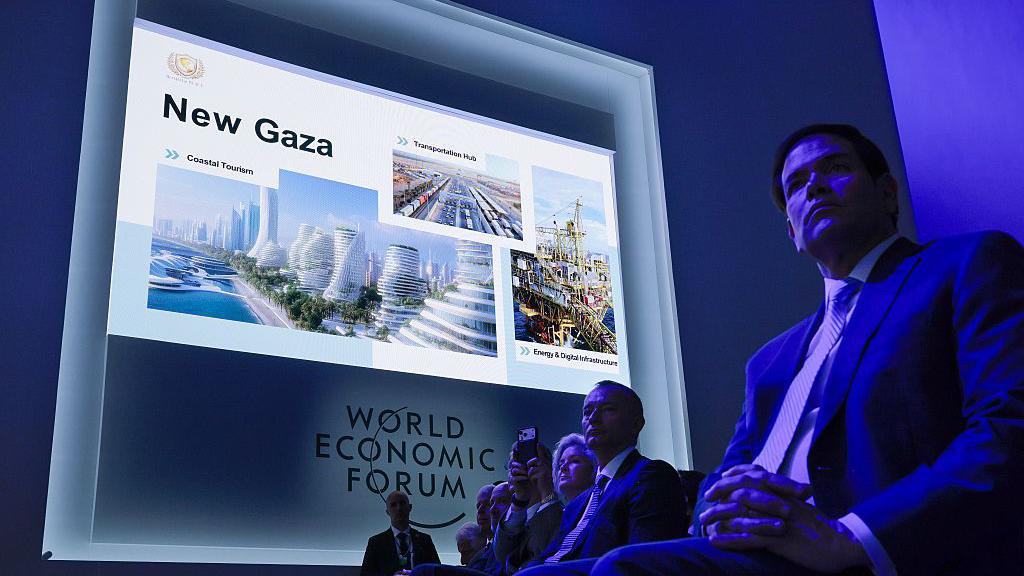
"It's not a genocide," but immediately the chilling idea is raised of using an area devastated by bombs, missiles, and bullets as a project driven by greedy and covetous interests that reflect the lack of humanity of those who promote it, managing to install a completely foreign society and inhabitants, and new "economic and tourist" purposes –as Trump calls them– eliminating the Palestinian population that inhabited the region. This makes it clear that no matter how much one decides to deny what happened, actions speak louder than words.
Conclusion
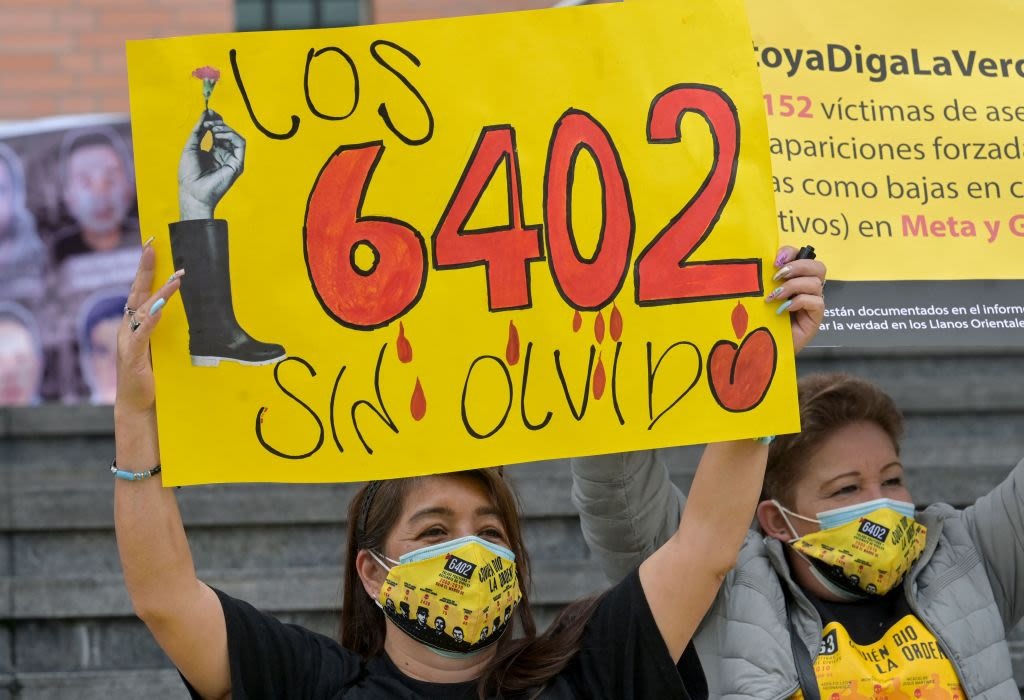
In an internal context where armed conflict has deeply harmed and shaped Colombia's history, with terrifying cases such as the "false positives" that occurred between 2002 and 2008, it is alarming to learn that current presidential candidates decide without remorse to deny a genocide recognized by state actors of the international community and international organizations such as the United Nations, whose International Court of Justice ordered Israel in January 2024 to take measures to prevent acts of genocide.
If it was thought that international conflicts had no direct impact on the internal politics of countries, perhaps that thinking should be reconsidered by observing the case of the People's Debate, since the impact of an opinion given so lightly by writing "No" on a whiteboard when asked about the existence of genocide shows signs of historical denialism in the face of crimes against humanity that, by evidence, the impact and repercussion on affected communities is known. Responses like these are not deliberate acts or raised from ignorance, but rather conscious strategies that demonstrate that oblivion can become a tool to continue perpetuating violence against vulnerable communities that inhabit our societies.
Bibliography
- El Tiempo - "'El Debate de la Gente' concludes: these were the statements from the pre-candidates of the Gran Consulta por Colombia" https://www.eltiempo.com/politica/elecciones-colombia-2026/el-debate-de-la-gente-en-vivo-siga-el-minuto-a-minuto-de-la-cita-entre-precandidatos-de-la-gran-consulta-por-colombia-a-la-presidencia-3526964
- United Nations - Definition of Genocide, Office on Genocide Prevention https://www.un.org/en/genocide-prevention/definition
- OCHA - Data on casualties, United Nations Office for the Coordination of Humanitarian Affairs https://www.ochaopt.org/data/casualties
- NPR - "Trump signs Board of Peace charter at Davos as allies split on Gaza plan" https://www.npr.org/2026/01/22/g-s1-106799/board-of-peace-gaza-trump
- Human Rights Watch - "Gaza: World Court Orders Israel to Prevent Genocide" https://www.hrw.org/news/2024/01/26/gaza-world-court-orders-israel-prevent-genocide
- Human Rights Watch - "The Role of High Command in False Positives" https://www.hrw.org/es/report/2015/06/23/el-rol-de-los-altos-mandos-en-falsos-positivos/evidencias-de-responsabilidad-de
- International Court of Justice - Application of the Convention on the Prevention and Punishment of the Crime of Genocide in the Gaza Strip https://www.icj-cij.org/case/192