The results of the first round of Colombia’s presidential election, announced on May 31, have opened up significant space for public debate. Political analysts and civil society alike are already identifying clear trends that may offer valuable insight into what the country can expect from the outcome of the runoff election. The final results will be determined on June 21, when Colombians both abroad and within the national territory exercise their right to vote.
Examining the Results
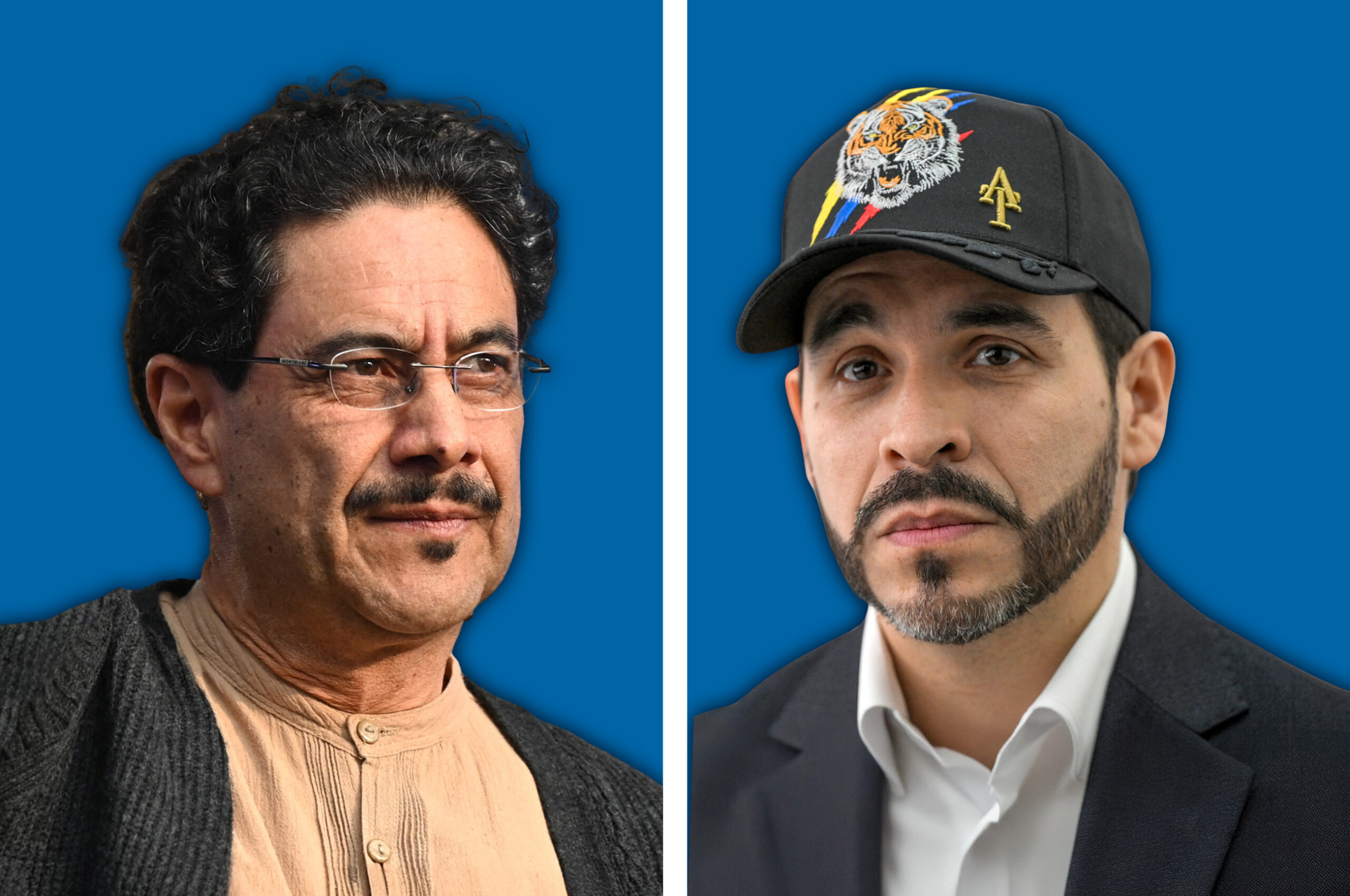
De la Espriella advanced to the runoff with approximately 43.7% of the vote, a result that was undoubtedly unexpected for the ruling coalition and even surprising for Abelardo’s own supporters. Although media outlets such as *La Silla Vacía* (2026) declared in their headlines that “Cepeda’s worst-case scenario came true”—namely, finishing in second place—the fact that Iván Cepeda secured a spot in the runoff with 40.9% of the vote hardly appears to be the worst possible outcome. The same cannot be said for Paloma Valencia, who failed to reach 7%. Sergio Fajardo obtained only 4.2%, while Claudia López barely managed to secure 1% (Medina, 2026).
The first conclusion that can be drawn from these results is the evident level of polarization surrounding the current electoral landscape. It is not merely that two candidates with profoundly different ideals, proposals, personalities, and motivations will face each other once again at the ballot box in ten days. It is also the diminishing strength, influence, and representativeness of centrist candidates in Colombia. For many, identifying as a centrist is equivalent to being *tibio*—a Colombian term often used to describe someone as indecisive or lacking conviction. For others, centrism represents the most reasonable position between what they perceive as two opposing extremes. Given the wide range of interpretations surrounding the concept, research examining the significance and performance of centrist candidates would be particularly valuable in a political context such as the one Colombia is currently experiencing, as well as for future electoral processes across Latin America.
Although such a debate would undoubtedly be worthwhile, it is not the primary focus of this article. For the purposes of this analysis, we take as a starting point the fact that 43.7% of the electorate has demonstrated support for a candidate who could potentially become Colombia’s next far-right president. While understanding the profile of the government’s candidate is equally important, the objective of this essay is to examine what lies beneath this current electoral trend. To do so, I will focus my attention on the man who calls himself a tiger.
Abelardo De la Espriella presents himself to the public as an outsider.
In Political Science, the term *outsider* is commonly used to describe figures who enter electoral competition from outside traditional political parties or established political elites, building their legitimacy upon professional trajectories that originate beyond conventional politics. In my view, however, I would not classify the candidate under this category. Rather, I would argue that Abelardo De la Espriella represents the political and ideological continuity of the Colombian right, albeit under a more modern and marketable name.
Paloma Valencia’s performance made it clear that Uribismo, as a political brand, no longer generates the momentum it once did. Álvaro Uribe’s preferred candidate failed to secure the level of support he had anticipated. Yet De la Espriella represents something different: a timely adaptation for a fragmented and weakened right-wing movement.
To consider this new political figure an outsider would be to ignore the reality of his ideological foundations. While it is true that he lacks a formal political career, the narrative he promotes, his political discourse, identity, and ideological framework fit squarely within the conservative tradition that has occupied a central place in Colombian politics for much of the country’s history. Indeed, had it not been for the election of the current president, Gustavo Petro, that continuity would likely have remained uninterrupted.
Although former president Álvaro Uribe publicly endorsed Valencia as his candidate, it is Abelardo De la Espriella who appears to embody Uribe’s deepest political aspirations: preserving the position of conservative elites at the summit of Colombia’s power structure. “*Dr. Abelardo De La Espriella won. We are keeping our word. We will vote for him, and we call on Colombians to vote for him and for Colombia,*” Uribe declared on his official X account.
Uribe’s statement implicitly suggests that voting for De la Espriella is synonymous with voting for Colombia itself. This assertion is particularly revealing and deserves closer examination.
With Gustavo Petro’s arrival to the presidency, groups that had historically remained closely connected to political power experienced a profound reality check: people were beginning to awaken politically. This administration represented a disruption to what had long been a succession of conservative governments and administrations more closely aligned with right-wing policies.
Within public discourse, there exists a widely accepted premise regarding the limitations faced by any incoming government. According to this view, it is unrealistic to expect a newly elected administration to resolve, within a single four-year presidential term, the structural inequalities, instabilities, and long-standing social problems that have affected a nation for decades. The argument implicitly points to preceding governments as the primary contributors to those challenges.
Although any serious analysis of this issue requires nuance, it would be historically inaccurate to attribute Colombia’s current realities entirely to the country’s first left-wing progressive president and his administration without taking into account the broader political context shaped by previous governments.
If we accept the premise that Colombia has historically developed within a predominantly conservative political framework—one rooted in traditional values and guided largely by right-leaning administrations—it becomes necessary to ask an important question: Why does the opposition’s electoral narrative insist that “recovering” Colombia or “saving” the country requires a return to right-wing governance, or in this case, to the far right?
Could it be that part of the Colombian population is overlooking a political history that extends far beyond the four years of the first left-wing government ever to lead the country?

Fear as a Polítical Instrument
There appears to be one particular word that accurately describes what some of the most powerful elites in this country have sought to instill in the everyday lives of Colombians: fear.
A study conducted by Markus Wagner and Davide Morisi, entitled *Anxiety, Fear and Political Decision Making*, examines the significant influence that emotions such as anxiety and fear exert on political decision-making. The authors classify these emotions as “negative,” arguing—based on findings from numerous psychological studies—that they produce harmful effects on both the human mind and body. In other words, their impact is not merely emotional; it also manifests itself in tangible ways.

"“Although anxiety clearly has effects on information seeking, it may also influence how individuals process this information and how, in turn, they make decisions” (Wagner & Morisi, p. 10)."
Earlier in their work, the authors explain how anxiety and fear increase an individual's tendency to seek information, often in a heightened or reactive manner. At the same time, these emotions shape how that information is interpreted and, consequently, how decisions are ultimately made.
From my own experience, I find it noteworthy that I do not follow any right-wing political figures, yet I was repeatedly exposed to paid political advertisements from opposition candidates such as Paloma Valencia and Abelardo De la Espriella. This raises an important question: Are we being subjected to a particular narrative regardless of our political preferences? More importantly, what exactly is that narrative?
* If their intention is to inspire hope and reassurance, it must be said that they are often producing the opposite effect. What these messages frequently generate is misinformation, anxiety, confusion, and fear.
These political actors, who present themselves as fierce critics of crime, drug trafficking, insecurity, and disorder, may in fact be contributing to the perpetuation of a historical cycle of violence that has long shaped Colombia’s social reality. Their rhetoric reinforces the notion that the appropriate response to conflict is more aggression, more hostility, more repression, and greater confrontation through the use of force and coercive mechanisms.
Conclusion
In light of this, I would like to make a call for reflection. It is difficult to imagine a different Colombia—a Colombia in which hatred, aggression, hostility, and violence are no longer normalized—if we continue to follow the same paths that have helped entrench these realities in the first place. The power of language may seem insignificant until we begin to witness the consequences of political discourses that normalize hatred and portray violence as the most viable path to governing a nation.
Colombia is undeniably beautiful, and it is understandable that Colombians wish to enjoy the richness, diversity, and opportunities that their country has to offer. Much of the nation's history has unfolded under the shadow of violence. No Colombian is entirely detached from this reality, and today we are all searching for ways to move forward.
Yet the narratives discussed above continuously and often unconsciously reproduce these patterns within society. One way to break free from them is to reject political figures who employ fear as a tool of persuasion and manipulation.
Colombia is far more than what they want you to believe.